You know exercise is important. You know strength training is especially beneficial during menopause. And yet, somehow, getting started or sticking with it consistently can feel surprisingly difficult.
Sound familiar?
In my work with women navigating perimenopause, menopause, and beyond, I hear the same things again and again:
“I know I should be doing something, but I just can’t find the motivation.”
“I always start with good intentions, but after a few weeks, I stop.”
“I simply have too much going on.”
And I get it. Between work, family, responsibilities, and an already busy schedule, finding time for yourself can be challenging. Add disrupted sleep, fatigue, and the physical changes that often come with menopause, and it can feel even harder.
But here’s something I really want you to remember: You don’t have to wait until you feel motivated. You can make a decision today. A decision to prioritize yourself, your strength, and your long-term health.
And then you start.
Why Strength Training Matters So Much During Menopause
As we get older, we naturally tend to lose muscle mass and strength unless we actively work to maintain them. Hormonal changes around menopause can contribute to these changes.
And our muscles are incredibly important for our health. They support our metabolism and blood sugar regulation, help stabilize our joints, and play an important role in maintaining strong bones. Muscle strength also helps us stay active, mobile, and independent as we age.
That’s why I consider strength training one of the most valuable investments we can make in our healthy longevity.
And here’s the good news: It’s never too late to start.
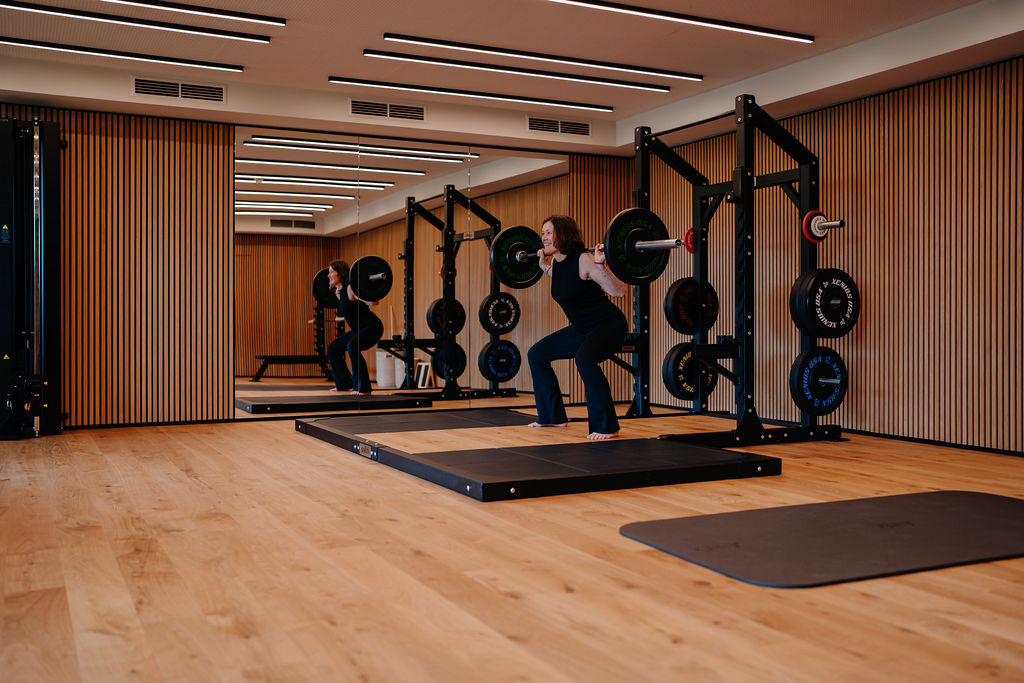
Even if you’ve never lifted weights before, you can build strength and improve your physical fitness. You don’t necessarily need a gym membership or hours of free time. What matters is finding a routine that works for your life and doing it consistently.
If you’d love some guidance and a structured training plan, my six-week online strength training program POWER & BALANCE starts November 2.
1. Don’t Wait for Motivation. Make a Decision.
This is one of the most important things I teach my clients.
So many women wait until they finally feel motivated to exercise. They imagine waking up one morning full of energy, thinking, “I can’t wait to do my strength workout today!”
And sure, sometimes that happens. But very often, motivation comes after we’ve already started.
It grows when you begin to notice how good movement makes you feel. When you realize you’re getting stronger, feeling more stable, and finding everyday activities easier.
And yes, that can take a little time. Not every workout feels amazing. Not every change is visible after two weeks.
That’s why making a decision is so powerful. You’re deciding to do something for yourself. For your body, your well-being, and your future. And then you follow through, even on the days when motivation is nowhere to be found.
2. Don’t Feel Like Exercising? Start With Five Minutes.
This is one of my favorite little tricks.
You’ve planned to work out today, but the couch looks incredibly inviting?
Make a deal with yourself: I’ll just do five minutes.
Put on your workout clothes, start moving, and see how you feel. Often, getting started is the hardest part. Once you’ve overcome that first hurdle, five minutes can easily turn into 20 or 30.
And if you really stop after five minutes, that’s okay too. You’ve still shown up and maintained your routine.
Of course, five minutes alone won’t provide all the benefits of a structured strength training program. But as a strategy to overcome that initial resistance, it can be incredibly helpful.
3. Schedule Your Workouts Like Important Appointments
If it’s not on your calendar, it’s easy to postpone. That’s why I recommend scheduling your workouts just like any other important commitment.
At the beginning of each week, decide when you’re going to train. Maybe mornings work best for you. Maybe your lunch break or early evening is more realistic.
There’s no single perfect time to exercise. The best time is the one that works with your life.
Once you’ve scheduled your workout, treat that appointment with yourself as seriously as you would an appointment with someone else. Your health deserves a place on your calendar.
4. Find a Workout Buddy or Join a Group
Everything feels a little easier when we’re doing it together.
If you’ve arranged to exercise with a friend, you’re often more likely to show up. After all, you don’t want to let your friend down. And working out together can be much more fun.
The same applies to joining a class or training group. You have structure, accountability, and people who are working toward similar goals.
Even when you’re training online, being part of a supportive community can make a big difference.
That’s something I love about POWER & BALANCE. You can complete your workouts from the comfort of your own home while being part of a group of women who are all working toward becoming stronger.
We also meet for three live Zoom sessions throughout the program to answer questions, share experiences, and keep each other motivated.
5. Invest in Yourself and Your Health
Here’s something we sometimes underestimate: Making a financial investment can actually help us follow through.
When you sign up for a course, hire a trainer, or invest in a structured program, you’re making a conscious commitment. You’ve decided that your health is worth your time, energy, and resources.
And naturally, you want to make the most of that investment.
Of course, you don’t have to spend money to become stronger or healthier. But if you’ve been trying to get started on your own for months or even years, having a clear plan, professional guidance, and a supportive group might be exactly what you need.
I see this all the time in my coaching practice. Women feel more confident when they know what exercises to do, how to perform them correctly, and how to progress. They can stop overthinking and simply get started.
If that sounds like what you’ve been missing, I’d love to welcome you to POWER & BALANCE.
6. Make Getting Started as Easy as Possible
The fewer obstacles between you and your workout, the better. Here are a few simple strategies that can help:
- Lay out your workout clothes the night before.
- Keep your exercise mat and dumbbells somewhere visible and easy to access.
- Save your workout video or training plan so it’s ready when you need it.
- If you’re planning to exercise in the morning, prepare as much as possible the evening before.
- Connect your workout to an existing habit, such as having your morning coffee or finishing your workday.
These things might sound almost too simple. But when you’re tired, busy, or unmotivated, removing even a few small obstacles can make a difference.Make it easy to start, and you’re more likely to follow through.
7. Be Kind to Yourself. But Don’t Let Yourself Off the Hook Too Easily.
This one is especially important to me.
So many women are incredibly hard on themselves. They miss one workout and immediately feel guilty. One busy week throws them off track, and suddenly they feel like they’ve failed again.
Please be kind to yourself.
You don’t need to exercise perfectly, eat perfectly, or get everything right every single day. Building a healthy lifestyle is a long-term process. There will always be weeks when life gets complicated.
In my work, I focus on three pillars of healthy longevity: Nutrition, Movement, and Self-Care. All three matter, and they support each other.
Sometimes getting enough sleep or allowing yourself to recover is exactly what your body needs.
But I also believe in being honest with ourselves. Do I genuinely need rest today? Or do I simply not feel like exercising?
If you’re sick or completely exhausted, your body may need a break. But if you’re feeling physically fine and the couch is just more appealing than your workout, remind yourself of the decision you’ve made.
Maybe it’s time to try that five-minute trick.
You can be compassionate with yourself and still hold yourself accountable.
8. Celebrate Your Progress and Keep Going
We’re often so focused on big goals that we forget to notice the small improvements along the way. And those little wins can be incredibly motivating.
Maybe an exercise that once felt difficult is getting easier. Maybe you’re ready to lift a heavier dumbbell. Maybe you can carry your groceries upstairs without thinking twice about it.
I hear stories like these from women in my strength training programs all the time. And I absolutely love them!
Because getting stronger also means building trust in your own abilities.
In psychology, we call this self-efficacy: the belief, strengthened through experience, that our actions can make a difference.
And these experiences often extend far beyond the workout itself. Women start feeling stronger, more confident, and more capable.
They trust their bodies again. They realize what they’re able to achieve. And that confidence can carry over into so many other areas of life.
Take a moment every now and then to recognize how far you’ve come. And keep going, even when things don’t go perfectly.
How to Turn Strength Training Into a Long-Term Habit
Research on habit formation shows that repeating behaviors regularly in a consistent context can help them become more automatic over time.
How long that takes varies significantly from person to person. So after six weeks, a new exercise routine won’t necessarily feel completely automatic.
But six weeks can be a fantastic start.
You gain experience, become more confident with the exercises, begin noticing progress, and learn how to fit strength training into your life.
And perhaps most importantly, you begin to see yourself as someone who takes care of her strength and health.
That’s exactly what I want women to experience through POWER & BALANCE.
A structured six-week program gives you the opportunity to build momentum, develop confidence, and establish a foundation you can continue building on. And the real benefits of strength training grow as you continue over the months and years ahead.
Ready to Get Stronger? Join POWER & BALANCE
Maybe you’ve been reading this and thinking: Yes, this is exactly what I need. I know strength training is important, but I need a clear plan, some guidance, and a little accountability to finally make it happen.
Then I’d love to invite you to join POWER & BALANCE.
My six-week online strength training program is designed specifically for women navigating perimenopause, menopause, and beyond.
You’ll train from the comfort of your own home with a structured workout plan, professional guidance, and my personal support.
We’ll also connect through three live Zoom sessions where you can ask questions, share your experiences, and stay motivated alongside other women.
You’ll learn to train safely and effectively, progress at your own pace, and build confidence in your strength.
POWER & BALANCE Starts Again
If you’ve been thinking about starting strength training or finally getting back into a consistent routine, this is your moment.
Make that decision for yourself. For your strength, for your health, and for the years ahead.