“I was always the one who ran. Cardio, non-stop.”….like most women, that is probably you as well: we grew up believing cardio is what’s healthy, and strength training is for someone else, for bodybuilders, for men, for people who want to “go overboard.”
That’s not because anyone meant harm. That’s just how we were raised. But we know better now. And the moment you start training for strength, more changes than you’d expect.
Muscle Is Your Longevity Organ
This isn’t a marketing line, research keeps showing it more and more clearly: muscle is the most important organ for healthy aging. Not just for how you look, though that too, but above all for:
- your metabolism: more muscle means a higher resting metabolic rate and better blood sugar regulation
- your bones: strength training is the strongest stimulus you have against bone loss
- your brain: strength training protects your brain and lowers your dementia risk
- your energy: muscles are packed with mitochondria, your cellular powerhouses. More muscle means more energy over time, not less
- And then there are myokines: hormone-like messengers your active muscles release, that protect your heart, your brain, and your bones, and that work against inflammation. Your muscle is basically a pharmacy. Muscle is medicine.
The Problem: We Lose Muscle, and Menopause Speeds It Up
Without strength training, we start losing muscle mass around age 35. Menopause accelerates that loss even further. This isn’t a footnote, it directly affects your metabolism, your posture, your everyday strength, and your fall risk decades down the line.
The good news: this can be stopped, and even reversed.
Now influences Later
When you build muscle, you don’t feel it 20 years from now. You feel it now: more energy, a body that feels steadier, less back pain, a better body composition. And at the same time, you’re building your healthy longevity, the decades ahead where you want to stay strong, independent, and mobile.
One doesn’t come at the expense of the other. One is the foundation for the other.
You Don’t Have to Train Perfectly, Just Consistently
If you’re reading this thinking your body is making this hard for you right now, I get it. My shoulder has been giving me trouble for months, and I still keep training, just adapted. Legs, my other arm, my upper body without the affected shoulder. The affected shoulder, carefully, but consistently. This isn’t about perfect, it’s about staying with it.
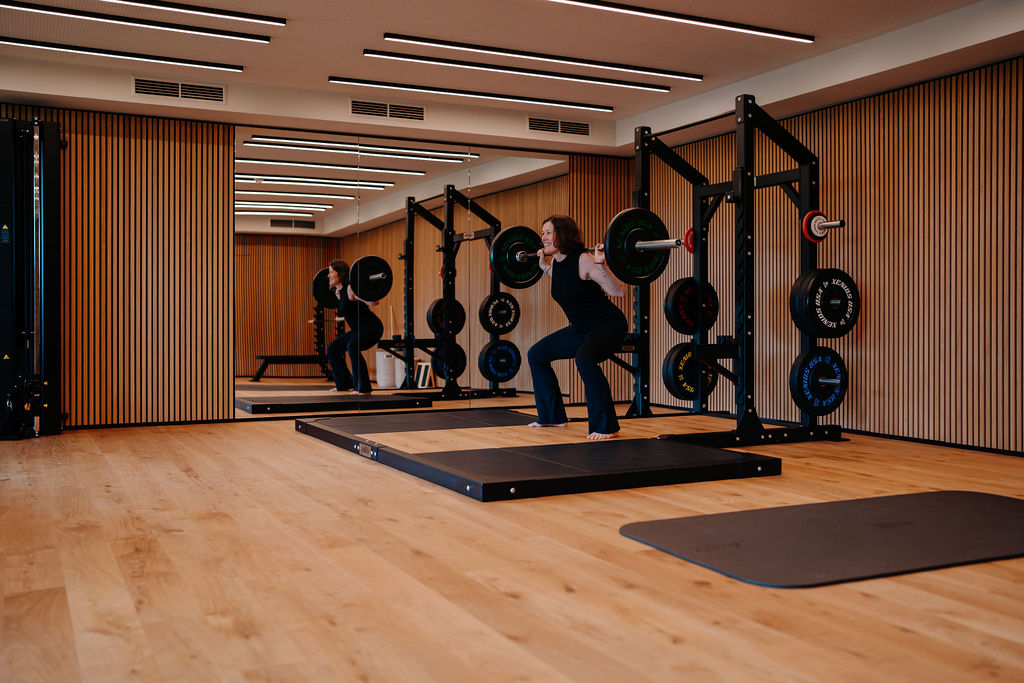
And the good news: it doesn’t take 10 hours a week. 3 times 30 minutes is enough, when you train with structure and proper form, with pelvic floor integration, with the knowledge of what your body actually needs at this stage of life.
That’s Exactly What I developed Power&Balance For
My strength training program, built specifically for women in and after menopause, for the rest of your life. Six weeks of routine, a WhatsApp community that supports you, and videos on demand if you’d rather train at your own pace. No gym needed, you can start right from home.
If you’re reading this and thinking you’ve known for a while that strength training is overdue: this is your sign. Just get started.
>> Join Power & Balance now <<