
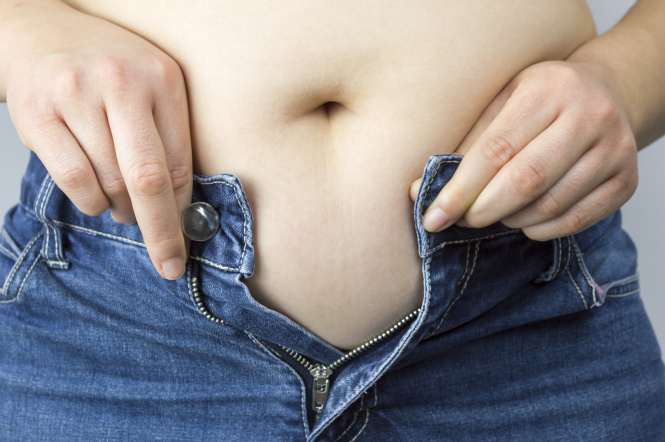
If you’re dealing with menopause belly fat, you’re not imagining it – and you’re definitely not doing anything wrong. You haven’t really changed anything, and yet your belly has. Your clothes fit differently. The strategies that used to work just… don’t anymore. And it feels like your body is suddenly speaking a language you don’t quite understand.
I hear this from women I work with all the time, and here’s what I want you to know: your body is changing. The rules are changing. And that’s exactly why we need to talk about this.
Why Menopause Belly Fat Is a Different Problem Altogether
Let’s take a moment with the term “visceral fat,” because it matters. Menopause belly fat isn’t just about how you look or what the scale says. Visceral fat sits deep in your abdominal cavity, surrounding your organs, and it’s hormonally active. That means it releases inflammatory messengers that affect your insulin sensitivity, your cardiovascular system, and your metabolism over the long term.
Research shows that without actively working against it, visceral fat can increase by up to 8–10% per year during menopause – often with no significant change in overall body weight. The distribution shifts. The ratio of fat to muscle shifts. And that is what really matters when it comes to belly fat in menopause.
The good news? You can do something about it, without punishing yourself or being perfect. Let’s get into it.
The 3 Triggers Behind Menopause Belly Fat Most Women Don’t Know About
1. Sleep: The Most Underestimated Factor in Menopause Weight Gain
I know, you’ve heard me say this before. Sleep matters, please take care of your sleep. And in menopause, that’s not always easy. But I’ll keep saying it, because the science is so clear: just two weeks of poor sleep can increase visceral fat – with no change in weight at all.
Why? Sleep deprivation raises cortisol, impairs insulin sensitivity, and puts your body into a kind of stress mode. Your body responds the way it would in a real emergency: it holds on to energy reserves, locks everything down, especially around the belly. Cortisol and belly fat are directly connected, and poor sleep is one of the fastest ways to drive that connection.
What helps: a consistent sleep schedule, dimmed lights in the evening, no eating two to three hours before bed. And if you know your nervous system struggles to wind down at night, try magnesium glycinate or breathing exercises with a longer exhale. Small rituals that signal: it’s safe to let go.
2. Endocrine Disruptors: The Invisible Hormone Hijackers
What are they? An everyday problem hiding in our environment. Chemicals in plastic bottles, cosmetics, cleaning products, and even receipts can act like fake hormones in your body. They disrupt your hormonal system and can directly influence how and where your body stores fat – including that perimenopause belly that feels impossible to shift.
This isn’t about scaring you, it’s about showing you that small changes in daily life make a real difference. Swap plastic containers for glass or stainless steel. Check your cosmetics for clean ingredients (apps like EWG make this easy). And try not to handle receipts directly with your hands when you can avoid it. Small steps, real impact.
3. Fiber, Gut Health, and Menopause Weight Gain
During menopause, the composition of your gut flora shifts too. Bacterial strains that promote inflammation and weight gain become more dominant and this directly contributes to belly fat in women over 40. What pushes back? Fiber. It feeds the good bacteria, stabilises blood sugar, and reduces inflammation throughout your body.
The goal: 25–35 grams of fiber daily. That sounds like a lot, but it doesn’t have to feel like it. Colourful vegetables, fruit, legumes, nuts, seeds. Start slowly if you’re not used to eating much fiber, and drink plenty of water alongside it. Your gut needs the fluid to process it well. Build up gradually, step by step.
What You Should Actually Be Measuring (Not the Scale)
The scale doesn’t tell the whole story when it comes to menopause belly fat. If you want to understand what’s really happening, look at your fat-to-muscle ratio. A body composition scale can give you a starting point. A DEXA scan is even more precise – it shows you exactly where your body fat is sitting and how much lean muscle mass you have.
Real data. Real decisions. And a much clearer picture of your progress than a number on the scale will ever give you.
The Bottom Line on Belly Fat and Menopause
Your body isn’t broken. It’s changing, and it needs different signals than it used to. Sleep, a cleaner environment (we can’t avoid endocrine disruptors entirely, but we can consciously reduce them), and a gut-friendly diet aren’t trends. They’re foundations. And they work deeply… on a hormonal level, a metabolic level, and a cellular level.
You don’t have to change everything at once. Start with one thing. Build it in until it sticks. Then add the next.
This isn’t a short-term fix. This is your foundation for long-term health – and a metabolism that actually works with you, not against you.
And you are worth that.
Want to go deeper and understand how nutrition, movement, and self-care work together to support exactly these changes? Take a look at my 10-week program Your Thrive Formula. We work together to build what actually works for you.